
CORE LOGIC
Transforming Property Insurance: A UX Journey with Core Logic's Building Estimation Calculator
Background
Core Logic embarked on a mission to streamline property insurance by addressing the gaps in the property life cycle.
The overarching goal was to simplify property insurance, mirroring the ease of auto insurance.
Their focus was on developing a calculator that demanded minimal input yet could precisely determine the optimal insurance coverage for a property.
Problem
The high levels of underinsured houses - leading to government interventions during natural disasters.
Over insured houses - cost which were unnecessary for home owners
Solution
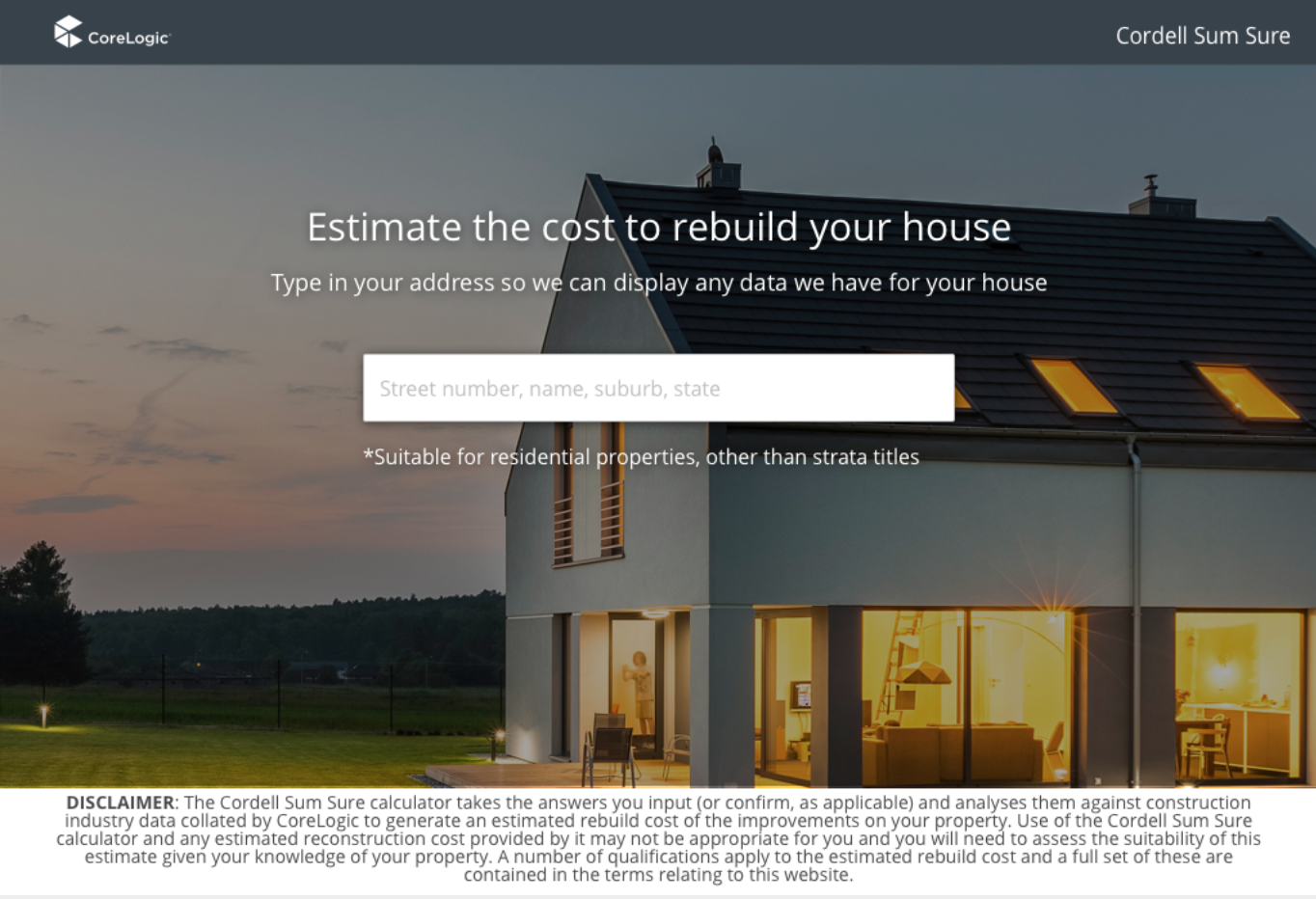
Core Logic aimed to educate consumers about the accurate amount required for insurance coverage.
The envisioned product had to calculate the comprehensive cost, encompassing full rebuild, demolition, and additional expenses.
Product Goals: A Comprehensive Redesign
A complete rebuild of the product, a UI overhaul, and improved usability.
White-labeling capabilities for tier 1 and tier 2 insurers
allowing varying levels of customisation in branding, business logic, questions asked, and final report appearance.
The focus was also on modernising the user experience
implementing responsive web design, providing visual cues for answering questions, and introducing analytics for the product.
Process: A Systematic Approach
Drawing up and understanding personas.
Conducting competitive analysis.
Analysing the customer journey.
Studying the existing New Zealand calculator.
Engaging in four rounds of interviews.
Understanding business goals.
Consulting all areas of Core Logic to comprehend their systems and APIs.
Conducting tech investigations of the current codebase and addressing performance issues.
Studying current analytics.
Research iteration 1: Insurer interviews

INSIGHTS:
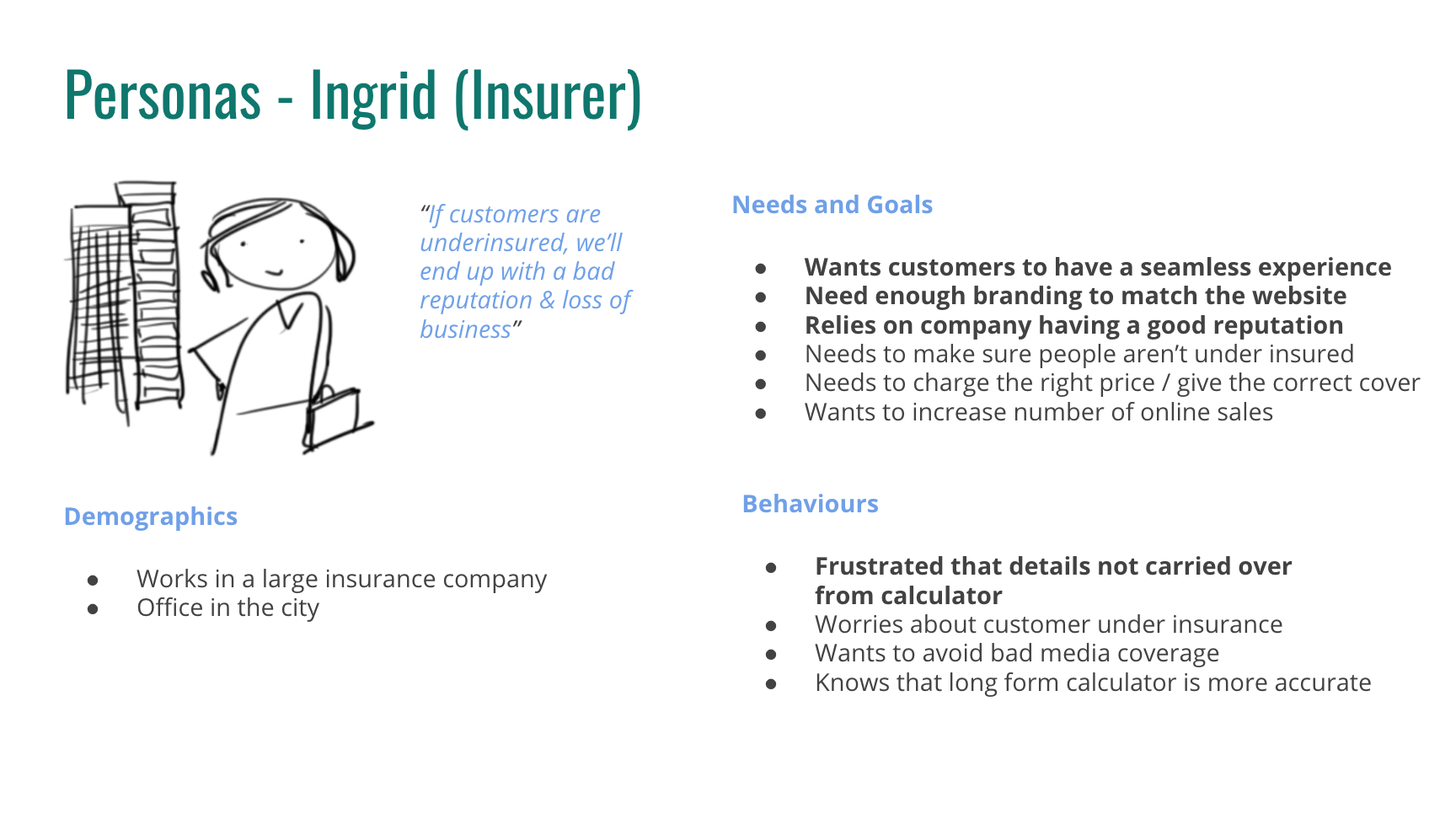
Insurer insights revealed the need for fewer questions to minimise drop-offs.
However, they also acknowledged that a longer form resulted in more accurate data.
Minimal branding requirements, seamless user experiences, and confusion over multiple estimates were key takeaways.
Research iteration 2: End User Interviews (Core Logic Employees)

INSIGHTS:
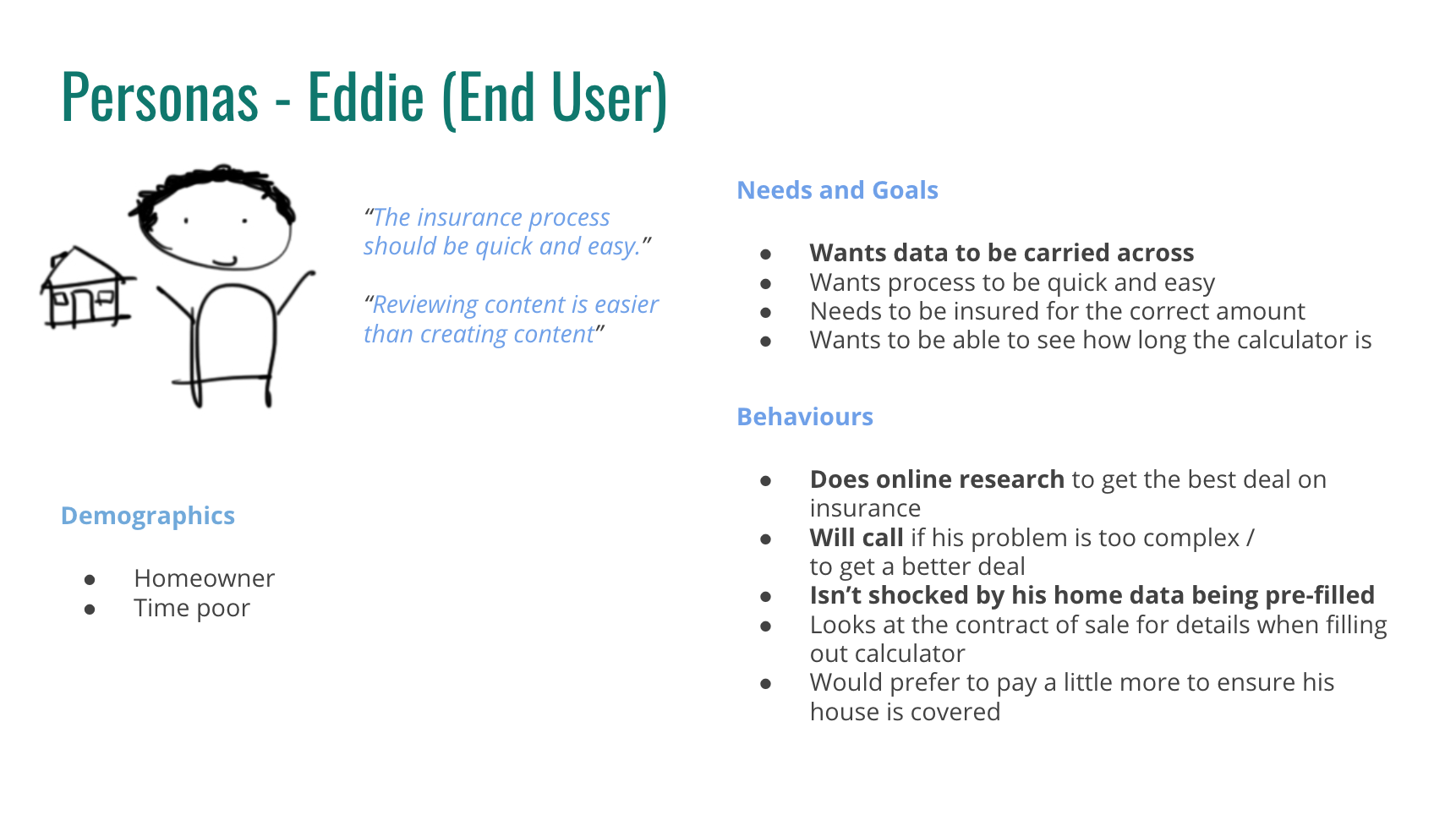
End users emphasised the preference for reviewing content over creating it, with positive feedback on the visibility of form length.
They expected pre-filled data and a simple, easy-to-understand interface.
However, concerns regarding data accuracy and the importance of insurers' branding for trust emerged.
Iteration 3: End User Interviews (Random Home Insurers)

INSIGHTS:
Users expressed delight at pre-filled data, finding the solution quick and simple.
Trust in insurers' branding played a crucial role, and users appreciated pre-filled data as long as they had the option to correct inaccuracies.
The revised prototype garnered positive reactions.
Iteration 4: End User Interviews (Random Home Insurers)

INSIGHTS:
Users loved the pre-filled data to aid in completing uncertain fields.
The need for easy accessibility of estimations and summaries for later use was highlighted.
Users sought external help to finalise the process and felt confused when pre-filled data was inaccurate.
Final Solution: MVP for Seamless User Experience
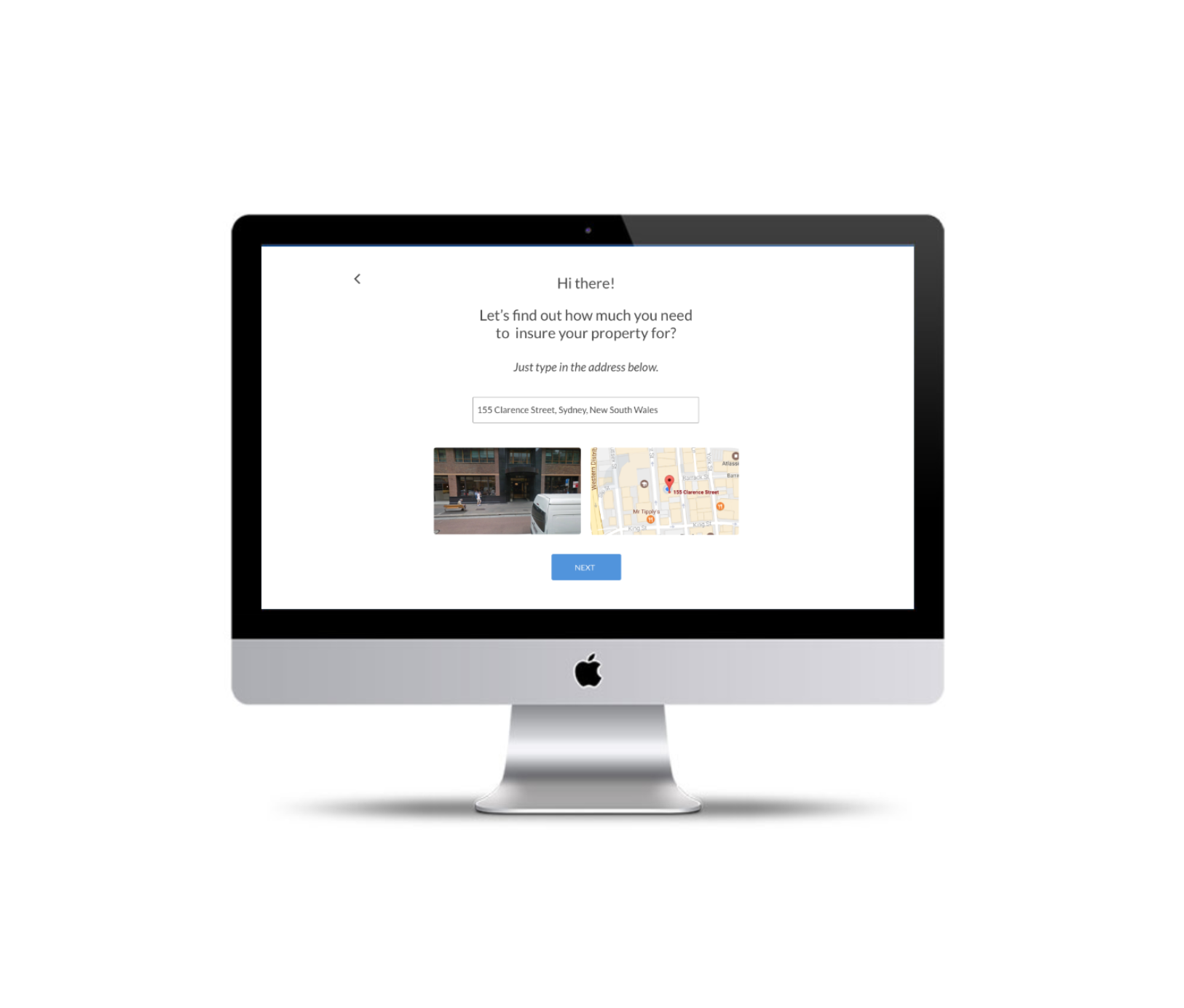
The culmination of insights led to the creation of a standalone Express Calculator with the following features:
A fresh question experience.
Auto-population of property attribute data.
White-label standalone experience.
White-label PDF reports, which the home owner could easily send to themselves.
Conclusion: Paving the way for effortless property insurance
The journey with Core Logic's Building Estimation Calculator not only addressed the challenges of underinsurance but also aimed to redefine the property insurance landscape.
The MVP stands as a testament to a user-centric approach, incorporating pre-filled data, intuitive interfaces, and white-labeling capabilities to provide a seamless and trustworthy property insurance experience.
As Core Logic moves forward, this UX journey ensures a foundation for continued innovation and user satisfaction in the dynamic realm of property insurance.