
VIATOR (an online marketplace for tours, activities & attractions)
AN Operator spotlight

Background
As part of Viator’s strategic initiatives, the focus was on
creating value for operators through strategic programs and partnerships
increasing operator visibility and brand recognition
assisting operators in showcasing quality signals to enhance customer decision-making
Problem
Travellers expressed that they didn’t have enough trust signals and information about Operators to help with their experience purchasing decisions.
Viator struggled to differentiate operators effectively in competitive markets.
However, the benefit of brand recognition at a product level on the marketplace was unproven - so needed to be tested.
My role
Competitive research to understand industry best practices.
Qualitative user interviews to comprehend user needs and expectations.
Synthesised insights and proposed UI solutions.
Collaborated on implementation of an A/B Test of a ‘Spotlight’ feature on Viator's Product Display Pages (PDP).
A/B Test of a ‘Spotlight’
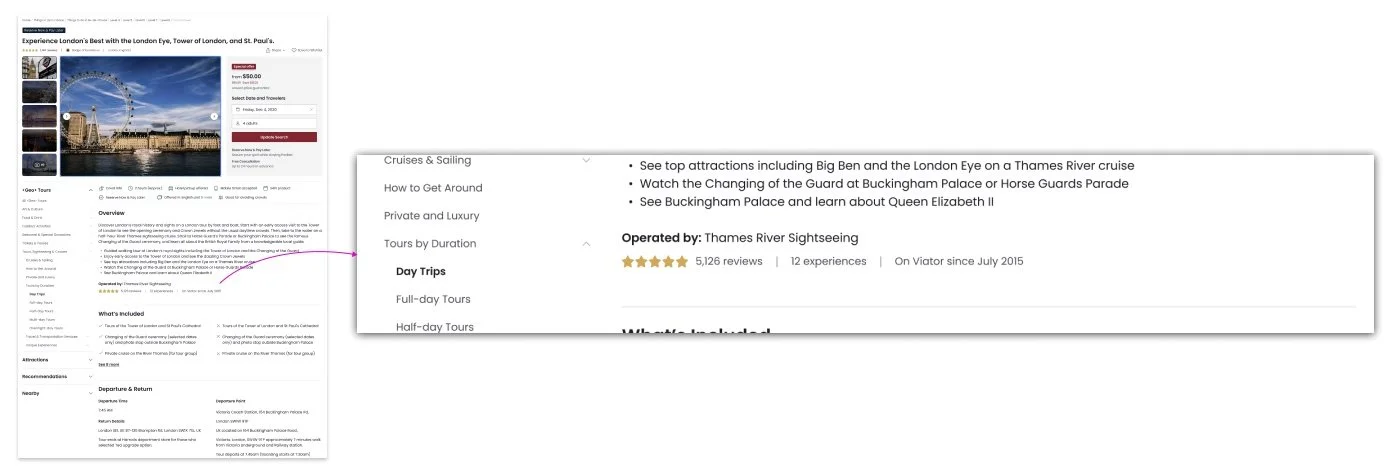
A ‘Spotlight’ was included on the PDP pages to:
Enable operators to showcase their brand to travellers and travel agents.
Enable travellers to view operator attributes to assess operator trustworthiness and suitability
Results of the A/B Test
Statistically insignificant results with a slight decrease in PDP page views.
Content of supplier information had no significant impact on visitor purchasing decisions.
Less than 2% of visitors attempted to click on supplier information.
Varied interaction patterns between mobile and desktop visitors.
Recommendations
Hold off on rolling out the 'Spotlight' feature to the entire platform and continue qualitative research.
Competitive Research
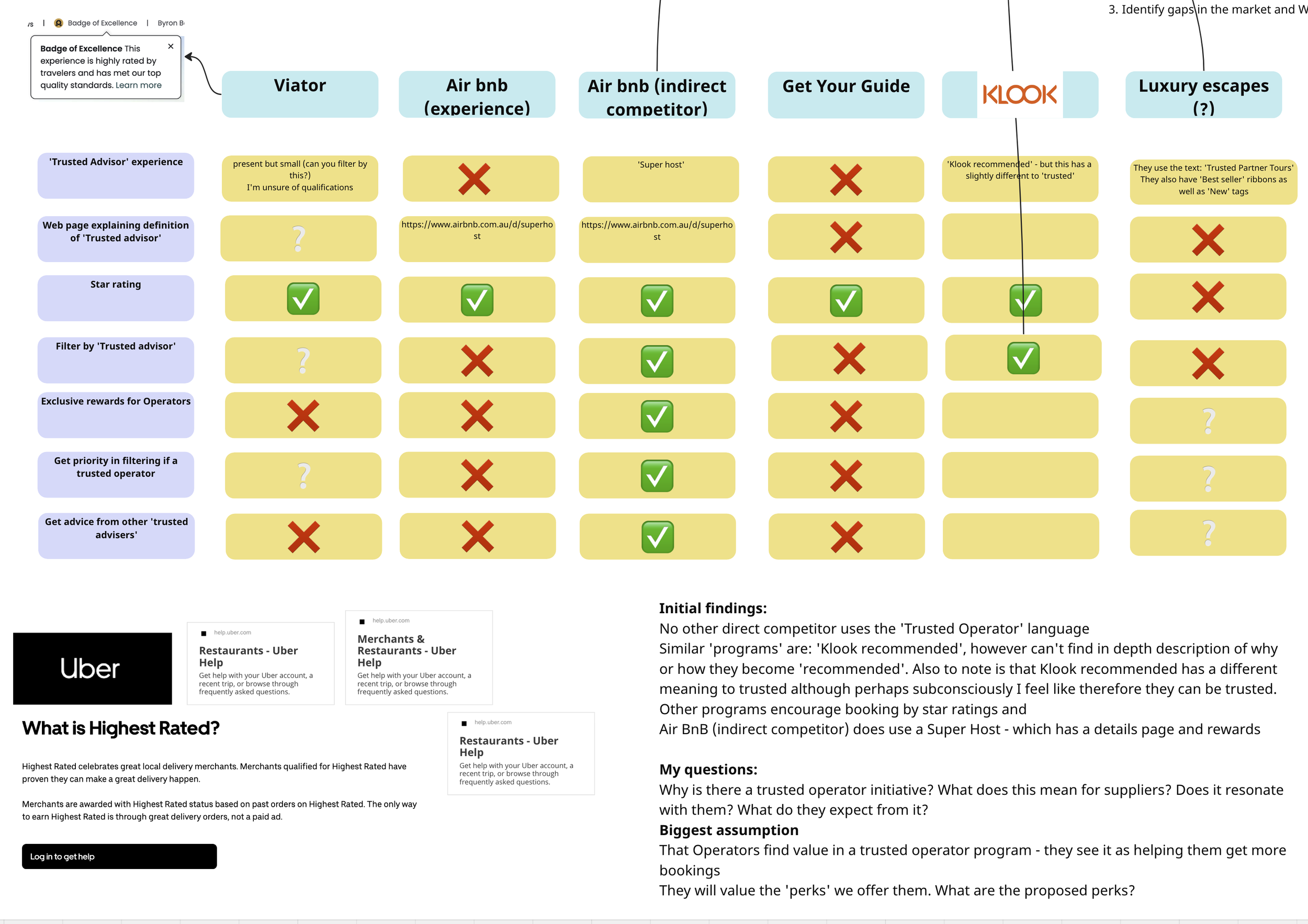
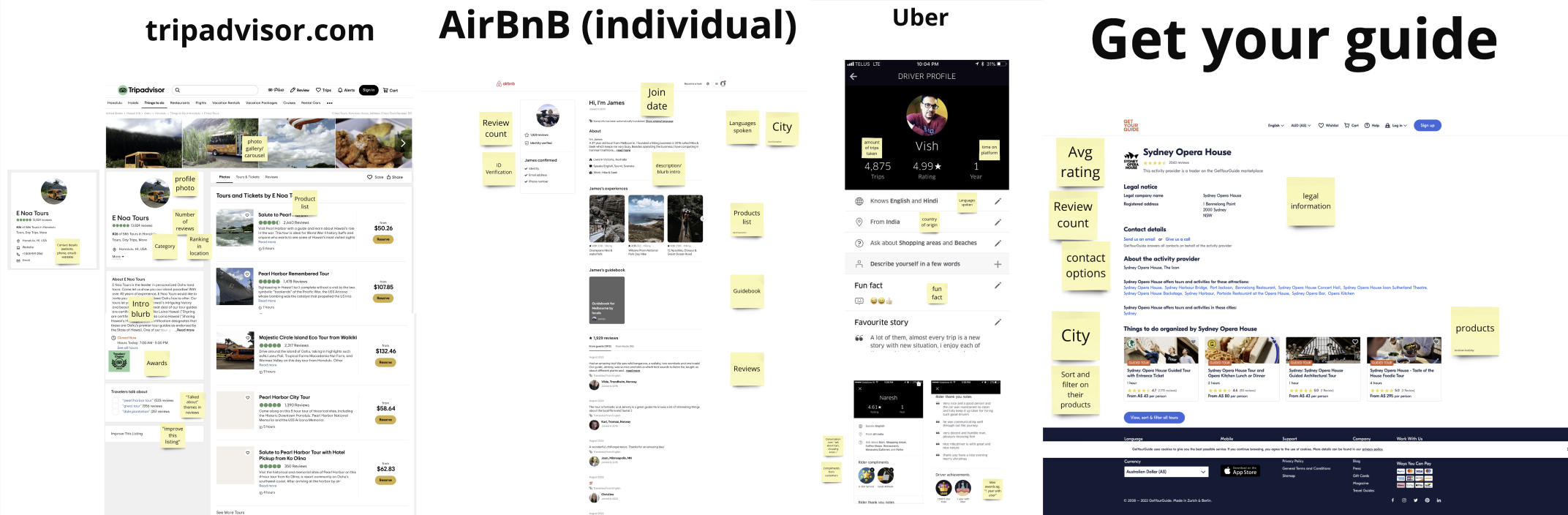
Badge programs have obvious benefits to sellers which makes it worthwhile to aspire to achieve a badge.
Previous research of a ‘Badge of Excellence’ found that travellers weren’t educated on the meaning behind the badge and so it possibly didn’t drive bookings.
All competitors had a star rating
The idea of being ‘trusted’ was only on Viator
Air BnB used the wording ‘Super host’ - which did hold sway for travellers
allowed filtering by their Superhosts
rewarded their operators for being a Superhost
Superhosts were given priority in traveller filtering
Klook used ‘recommended’ but this has a slightly different connotation than ‘trusted’
GYG didn’t have a comparative ‘trusted’ badge
Qualitative and quantitative operator research
Overarching goals of the study
To understand operator preferences for effective showcasing and differentiation
To assess if operators perceive sufficient value in the A/B test's results and determine if the feature should be implemented as is
*conducted an assumptions exercise to ensure we tested the riskiest assumptions
Approach
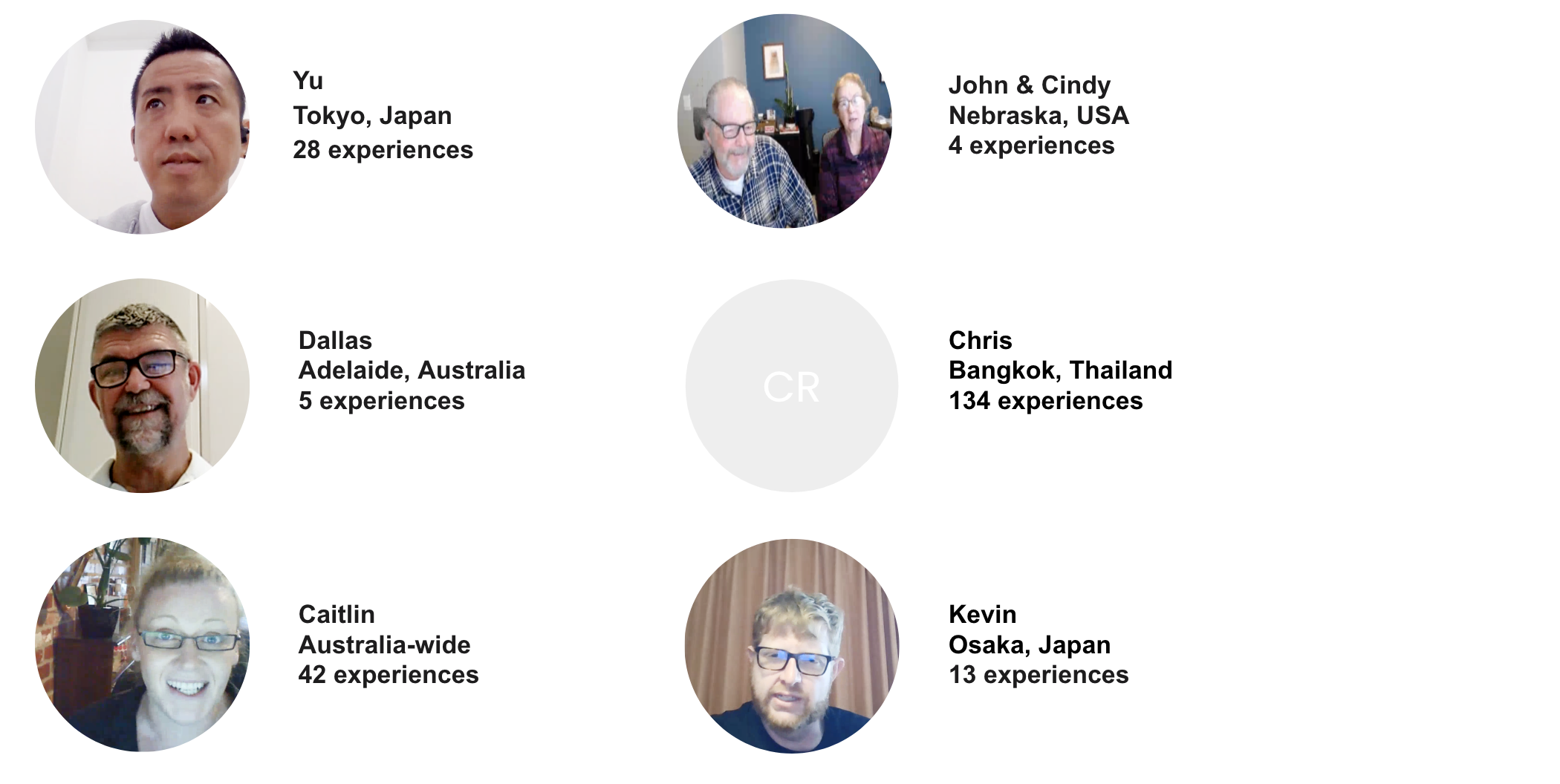
6 x user interviews
Australia (x2)
USA (x1)
Japan (x2)
Thailand (x1)
1x survey
which returned 1373 complete responses
Participants
High level synthesis summary
Operators want more than what we are giving from the A/B test version of Spotlight
Suggestions were via hyperlinks and a company tagline or blurb
Having a company ‘blurb’ was seen as a key ‘want’ (valuable to enable differentiation from their competition)
“It's hard to differentiate..... I think it's really important to show a brand's personality.... there's a lot of value in that.” - Kevin, Pinpoint Traveler
Value of Operator Page: Operators highlighted the value of having their own page, emphasising its utility in upselling new products and increasing brand awareness.
Mixed Reactions to Quality Metrics: While some operators welcomed showcasing certain quality metrics, concerns were raised about potential traveler misinterpretation.
Survey key takeaways
The survey, involving 1373 responses, provided nuanced insights:
Operators felt that the company name's visibility was insufficient and proposed its repositioning.
Positive feedback was garnered for the inclusion of reviews and ratings, emphasising their importance.
Many comments mentioned hyperlinks to information pages, own websites or more information.
Aha moments
In multiple interviews, operators emphasised the need for a distinct 'one-liner' to effectively differentiate themselves from competitors.
‘to add their flavour’ and ‘tell their story’
Recommendations
Building on the insights gathered, recommendations included:
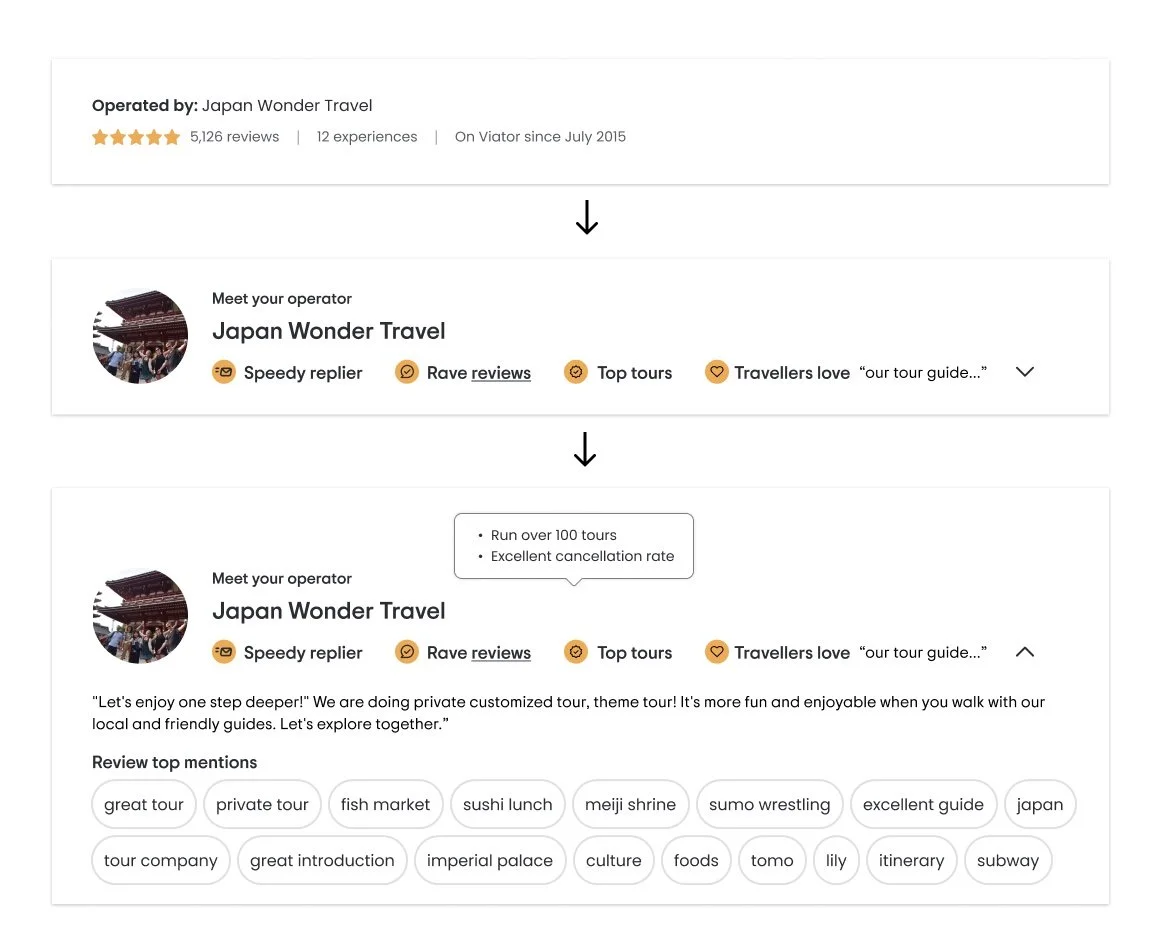
Redesigning how operator attributes are showcased on PDPs.
Integrating operator 'blurbs' within the 'Spotlight' snippet.
Streamlining and removing elements from 'Spotlight' that didn’t contribute meaningfully.
Repositioning 'Spotlight' information on PDPs for enhanced visibility.
Proposing further research with travellers to understand potential circumvention.
Next steps
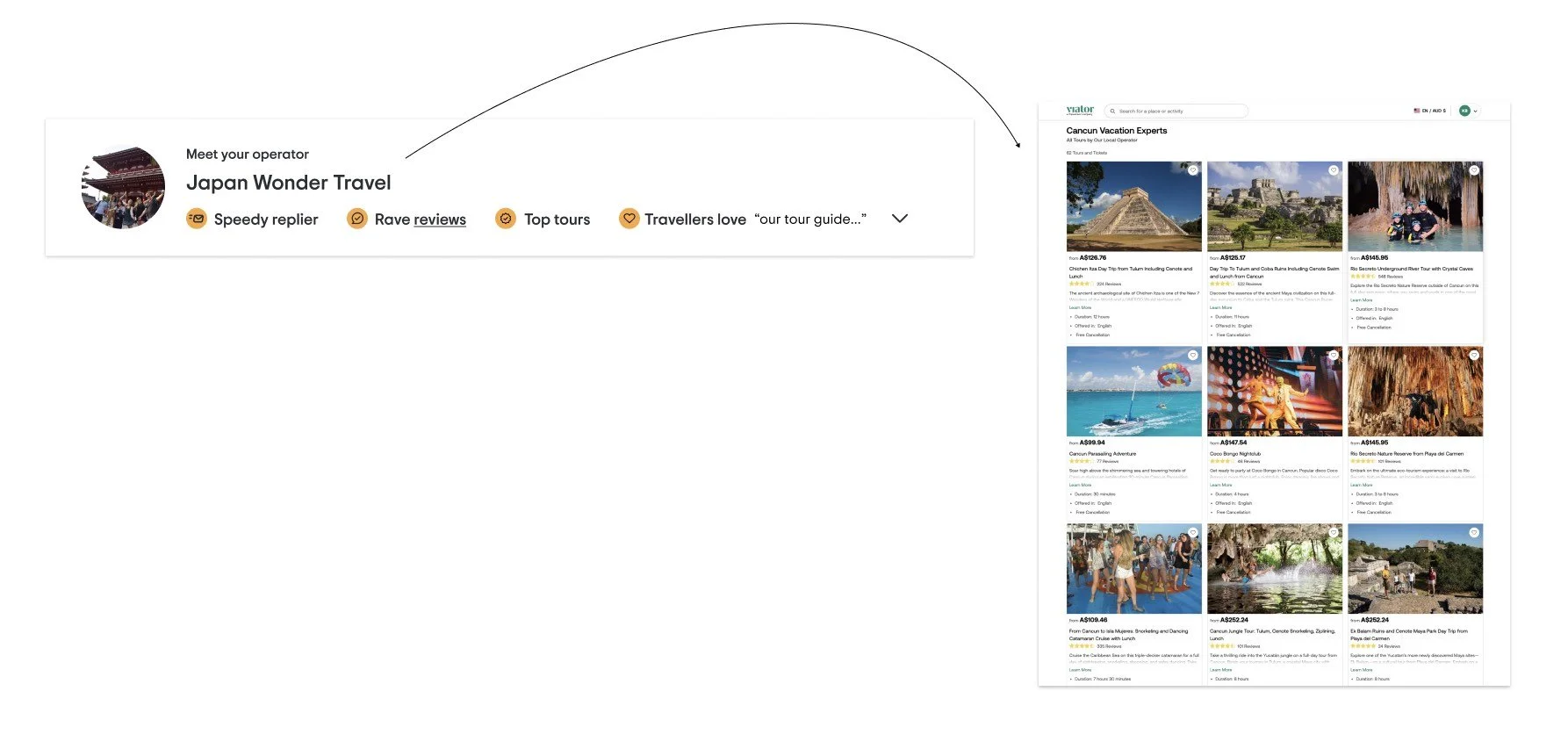
Conduct a click-through page test to assess user engagement.
Hyperlink operator names and reviews to enhance user navigation.
Consider aggregated reviews on the product collection page.
This case study highlights my role in addressing Viator's challenges, the research conducted, insights gained, and recommendations for an improved UX design to elevate the visibility and differentiation of operators on the platform.